Showing posts with label phone. Show all posts

Tuesday, November 17, 2020

On Exercise

I never liked sports when I was at school. All that running up and down, trying to get goals, or hit a ball over a net... it seemed entirely pointless. And I didn't much like the competitive aspect, either. That might sound odd for someone who thoroughly enjoys board and card games, but then one can't have a friendly chat while trying to play hockey or netball, or even tennis. 

I didn't like swimming, either, and I wasn't much good at gym. I did like modern dance, when we did that; I was in the Scottish Country Dancing club, too, and took over running it when I was fourteen or fifteen. That's quite energetic, so, added to my walk from the bus stop (about a mile) each afternoon, and the enforced team sports, I probably kept reasonably fit as a teenager. 

Fast forward to the late 1980s when I was married with two young children, and I walked miles - to and from local shops, to and from playgroups and toddler groups and eventually school. It was no more than about a mile each way to each place, but if I'd had a pedometer I'm sure I'd have registered at least five or six miles each day. 

When we moved to the US for two years, with no local shops within walking distance, and no playgroups, my walking was limited to once a day to and from my older son's school.  I did feel unfit at times, but when we moved back to the UK in 1994, the boys joined Cubs/Scouts and a local choir. They also both started piano lessons. So I did a lot more walking, and became rather fitter.

Then we moved to Cyprus. The heat precluded much walking, and we educated the boys at home. We walked to and from church activities, but the church we attended for the first eight or nine years was only about half a kilometre from our home. I did some gardening, mostly in vain as it was a huge and neglected plot, so keeping the weeds down was impossible. 

overgrown weeds in Cyprus garden

We'd got into the habit of doing a big supermarket shop, by car, once a week when we were in the United States, and we'd kept that going during the busy three years back in the UK, and for our first few years in Cyprus. It took me a long time to feel settled and to discover local shops (other than the excellent Perseus bakery, just around the corner, where we bought a lot of our bread). Before long the boys were old enough to walk to and from their local activities without an accompanying parent - and it was all too easy to become something of a couch potato.

A couple of times I acquired pedometers, thinking that if I could track the number of steps I took each day, I might feel more motivated to be a little more active. One of them was a freebie, the other bought inexpensively on special offer. I didn't get along with either of them. One broke rather quickly, the other didn't seem to track my steps at all accurately. Not even close. 

When we moved in 2006, from a large bungalow to a three-storey house, we discovered muscles we had almost lost the use of as we ran up and down hundreds of steps over the first few days.  Our home education days were just about over and we were soon to be empty nesters. I discovered some excellent local shops, meaning we didn't have to go to a supermarket every week, and I would sometimes walk to a shop before the heat of the day. But it was minimal, and I felt extremely out of condition.

So it was a good thing that I started walking regularly with my friend Sheila a little over eight years ago. We mostly walked either 4km or 8km, depending on the time, as she lived very close to the trail, and we weren't more than a kilometre away. It took me a few weeks to feel energised and able to chat while walking briskly. She's now moved a bit further away, and we only ever walk 4km on the trail now,  but I'm happy to say that we've continued walking together, albeit with breaks for the summer. Then of course we couldn't walk at all over the lockdown period in April and May. 

At the start of this year, I acquired a smartphone. I installed a step-counter, and at first was a little obsessive with it, wondering if I could do 10,000 steps every day, as was a trend some years ago. I quickly realised that, for me, this is unrealistic. When I walk with Sheila, I typically do about 8.000 steps so on those days - like today - I do usually get close to 10,000 by the end of the day.  Here's how it looked an hour or so ago:


If I reach 9950 by the end of the day, I might walk an extra couple of times around the room so as to pass 10k, but since that's not really serious exercise it's a bit pointless.  On days when I don't leave the house, I only do about 2,000 steps around the house, doing normal cooking, laundry etc. I was also walking locally, including popping into the local fruitaria around 6.30am two or three times a week, but with the latest anti-Covid regulations I can't go there before 10.00am as I'm not yet 65.  I sometimes do go for a short walk around a few blocks, but even though I only set my daily target as 5,000 steps, I don't always even manage that. 

I've read several articles, all saying that 10,000 steps a day is a good goal, more than that for people who want to lose weight. One I saw recently said that the most important thing is that at least 2,000 steps per day is done 'briskly' - and most of my walking is faster than 100 steps per minute, so apparently that's a good thing. 

During the strictest lockdown period when my exercise was limited to walking up and down our rather small side yard, I only managed an average of around 3,000 steps per day.  But now the weather's cooler and I'm back to walking part of the Salt Lake trail three times a week, it's looking better. Here's the first week of November:


(I had to Google to find out how to take screenshots on my phone, and then had trouble uploading them... but eventually it worked)

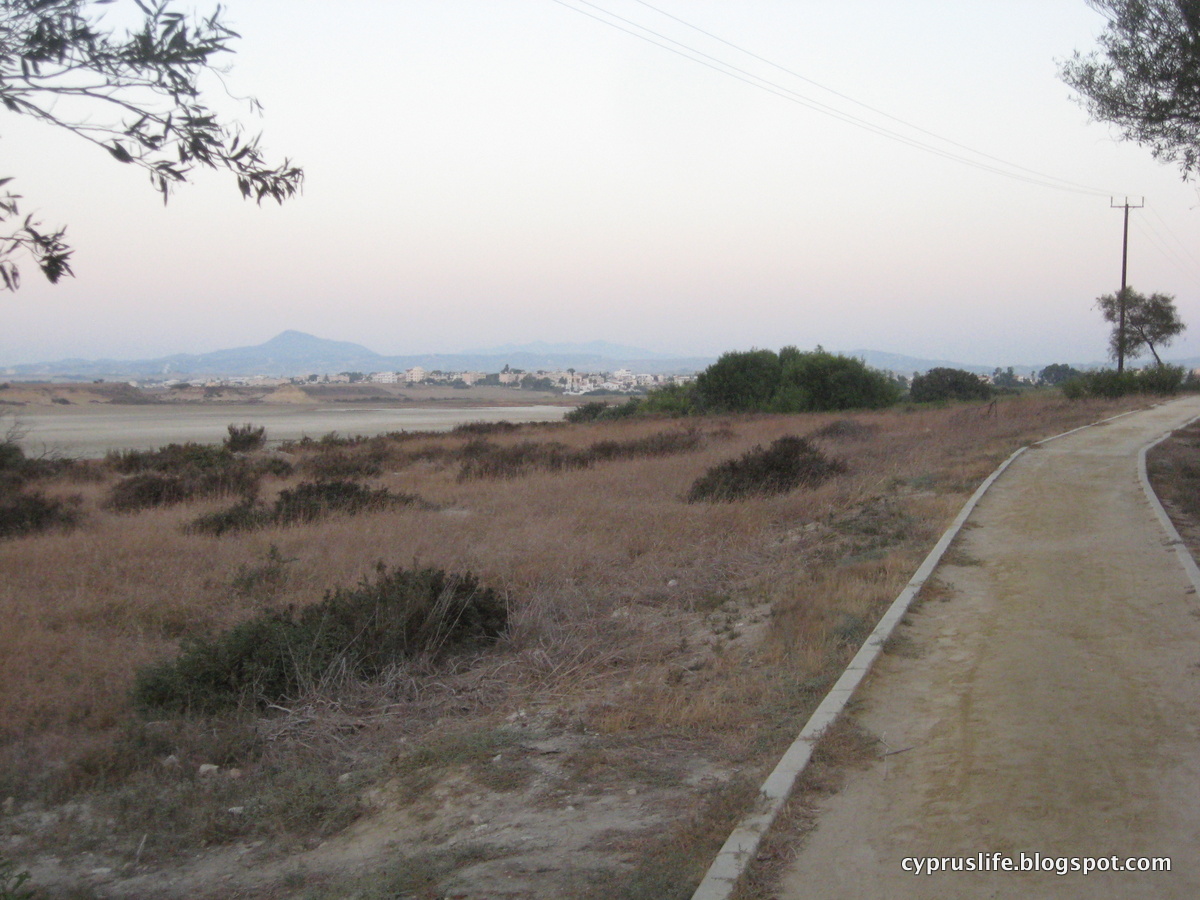
We walked this morning, and were pleased to see that, with the recent rains, the Salt Lake is looking a little fuller than it was:

Larnaka Salt Lake after some November rain


Saturday, November 07, 2020

Technology, top-ups and a scam...

On the whole, I like modern technology.  Some of it, anyway. Kitchen gadgets make cooking and baking so much easier and more efficient than in the past. Digital cameras are a great improvement, in my view, on the kind with film which had to be processed, and I love being able to make photobooks after scanning old negatives. My slim, sturdy photobooks replace the old, wide albums with faded prints, some of which have started falling out. 

I am also very thankful to be able to have good video communication with my sons and grandchildren in the UK, particularly during this pandemic when there's no chance to visit each other.  And after being dragged rather reluctantly into the smartphone world, I have to admit I like having a phone that can connect to the Internet, allowing me to use WhatsApp, and to check email, news sites or Facebook quickly when my computer isn't on.

There are many other advantages to modern technology, most of which I take for granted. And while I'm no great whizz at technology - not compared with my close family members, anyway - I can mostly get things to work fairly easily. I sometimes feel as if I'm pushing the boundaries of my knowledge, but that's not a bad thing.

However, today I realised I had to top up my phone 'pay-as-you-go' credit. One of my least favourite tasks.

I only knew it was that time of year because I happened to make an actual phone call to Richard to see when he was coming home for lunch. Before it connected, a robotic voice informed me that my phone validation period was ending, and I had to top up immediately.  I had not received a text message or any other alert about this. Had I not made one today, or within the next week or so, I might not have known until everything stopped working, and could possibly even have lost my phone number.  

I write texts rather more than I make phone calls - and use WhatsApp or Facebook Messenger more than sending texts. Looking at my logs, the last time I made a phone call was (also to Richard) a couple of months ago. I don't use up much of my credit, so I never run out, and the validity period of each ten euro top-up is just a year.  I think it would take me about five years to get through ten euros' worth of credit, since text messages only cost two cents each. Indeed, the only way I know how to make phone calls is to go to the text message area, find the person I want to phone, and click the little phone icon. I've never worked out how to make a call to a person (rather than just typing in a number) from the place that is supposed to be for phone calls. 

Ten or more years ago, I topped up by buying a card at a local shop, and then following the instructions on the back. Or, more likely, asking one of my sons to do it. But I knew I could do it online, through our bank. So I logged into that, chose to top up my SoEasy account with another ten euros, entered the one-time code from my phone... and ten euros was deducted from our bank account. That part was easy.

After doing it, at the top of the bank screen was a 16-digit number which said it was my secret code. I copied and pasted it quickly, so I didn't lose it. But what to do with it...?  

As ever, Google was my friend. It didn't take long to find this:

instructions for soeasy topup
Right. 

I called 1882 and a voice asked me to type 1 to top up my phone. I typed 1. The voice asked me to type in my 16-digit code, and press hash. I did so, a tad concerned that the 1 was showing at the start of it in the only place where I could type, and there was no way to delete it. So I wasn't too surprised when the voice told me the code was wrong. Or, rather, it said that the code had expired, which was a bit odd. Then it asked me to enter it again. 

So I carefully typed the code in again. 16 digits is a lot of numbers to type in, some of them repeated, but I checked it, hit the # key... and the disembodied voice told me that the code had expired and that I should try again.  

Sigh. I was carefully checking each digit, when the voice said it was still waiting. I don't like impatient robot voices, so I ended the call and thought I might try the other method.

Happily, the second method worked perfectly, and a voice told me that my phone had been topped up by ten euros. 

Whew. 

Then I received a text, telling me I should have topped up some other way to receive rewards.  But it said I could go to a website and see what bonus I might get there. I typed in the lengthy URL of the site, and the code I was sent.... and received this:

soeasy rewards of ten minutes

I checked my logs again. My call today was 16 seconds long.  The previous call, two months ago, was 13 seconds long.  The one before that, in June, was 39 seconds long.  

I did then discover a call I made in May which lasted five minutes; I have no idea what that was about, or why I would have such a long conversation.  But I shouldn't think I've made ten minutes' worth of phone calls all year - so my 'reward' is unlikely to be claimed. 

Still, I won't have to do that again for another year. 

Something else happened today that was a bit disturbing. I received an email, purporting to be from a local friend, asking if I could do her a favour.  Slightly odd phrasing, but I responded and asked what she wanted. The reply said, 

I am sorry for bothering you with this mail, i need to get an Amazon gift card for my Niece, Its her birthday but  I can't do this now because I'm currently out of reach and i have a little issues with my amazon account, can you please get it from any store around you or try buying online for me? I'll reimburse you hopefully this weekend.

It didn't sound like the normal style of the supposed sender, but it didn't seem impossible (though I was puzzled as to why she thought I could find an Amazon gift card in a local store).  So I responded, cautiously, that it might be possible but I'd need to know the details, the message to be sent, etc.  

The reply, almost immediately, said:

I need you to send it today, All i want is amazon gift card, Amount needed is €100
There were lots of triggers there, telling me this was wrong: the bad grammar, the request for such a large amount, the currency being euro when I knew that all this person's relatives were in the UK.  No way was I going to buy such a huge gift card for anyone, so I responded that I was not going to do that. 

I then noticed that the email address was NOT the normal one for this person. The first post had (apparently) come from that email address, but the 'reply-to' email was a different one, starting the same but with a different provider.  

A quick Google search revealed that this, or something similar, is a well-known scam.  So I reported the message to my email provider and didn't respond further. 

I'm usually fairly good at spotting scams, fake news, and false information on Facebook, so I was a tad embarrassed that I even considered for a moment that it might be real. But thought it worth posting a warning in case anyone reading this receives anything similar. 

Thursday, January 02, 2020

New year, new decade, new (to me) phone....

Back in September 2018, I wrote about starting to use a basic smartphone. I called it my 'slightly intelligent' phone as it didn't actually do all that much. That was good, I thought, as I had resisted the idea of a smartphone for a long time. But being able to see photos of the grandchildren via Whatsapp was a big motivation to acquire one, and to start using it as a phone when my old phone (which was not at all intelligent) was becoming unusable.

I was surprised how much I liked it. It didn't have room to install much, but my son put an extra chip in it, and I was able to download an app for gmail, and Facebook 'Lite', and a few other things. When I travelled briefly to the UK a year ago, to see the family, I didn't take a computer; I was able to keep in touch with friends and Facebook via my phone.

What I liked most of all was being able to check email and Facebook updates quickly in the morning, before going out for a walk or having breakfast. Sometimes I'm anxious to hear from someone, or concerned about something, and in the past I would have turned my computer on - only to get distracted, possibly for hours. With the phone, I could check all I needed in about five minutes, and then get on with my day. I've reached the point where I don't usually turn my computer on until after lunch, meaning I get a lot more done in the mornings.

There were some disadvantages to such a basic phone, however. The main and most frustrating one was not having a camera on the front. Not that I wanted to take selfies; the problem was that trying to video chat with my grandchildren meant I had to stand in front of a long mirror in order for them to see me. We would try the computer, but the technology doesn't always work. So we would usually end up waiting for Richard, if he was out, so we could use his phone.

I was mildly disappointed that there was no way to instal a step-counter on the phone, and also found the poor quality of the photos on it a bit disturbing. I still have a camera and mostly use that. But when I go walking with my friend Sheila early in the morning, I don't usually take anything other than my house keys and phone.  There are a lot of flamingoes on the Salt Lake this year (over a thousand, we're told), but when I tried taking a photo with my old phone, the best of them looked like this:


If you click to enlarge it, you'll see that they just look like pink blobs.

Back in the summer, my family tried to persuade me to buy a better phone, and I did look at some options. But some were too big, and some were too heavy, and the ones that quite appealed (and which weren't horrendously expensive) had poor reviews.  So I decided not to bother.

However, Richard bought a new Android to replace the one he had been using for work which had become unreliable, switching itself off every couple of minutes.  He had hoped I might like one the same, but it was too big for my hands, and too heavy to feel comfortable.

In an idle moment I did some online research and learned that random turning off is a common feature of this kind of phone when the battery needs replacing; it swells slightly, and triggers the off button. I quite liked that phone - so we decided to order a replacement battery, to see if it could be made to work.


Our son brought it out with him when he came for a week over Christmas, and I agreed to try it. He moved my sim, and the extra memory chip, and put the new battery in.  It worked!  It was so much faster than my other phone! Installing the same apps was easy and quick!


Yes, it really is only 15 degrees here at present, down to about 9 overnight.  Not warm at all.

The phone is bigger but not much heavier than my old one, and it has a camera on the front as well as the back. It also let me instal a step-counter, which I hope will motivate me to do a bit more walking. I'm not doing very well so far; this morning it was raining at 6.00am so I didn't go out walking with my friend.


The pictures taken still aren't as good as my real camera, but they're a lot better than the other phone was.  Here's how the flamingoes looked on the 'new' phone when we walked early in the morning on New Year's Eve:


They're still not particularly clear in a photo this size, but much more obviously flamingoes if you click to enlarge the picture.

Within a couple of days, I was carrying the phone around with me everywhere. I'm still getting used to some of the functions, and am quite slow with it. I am not planning to use it for YouTube or even browsing, but I like the speed, and the quality, and the ease of use.

I passed my other phone to my friend, for her younger daughters to use when out and about. They have already done more with it than I ever managed to do.  No doubt there are far more features on my 'new' one than I am aware of, and I probably won't ever discover the majority.

But, as we start the 2020s (yes, I know, this is technically the last year of the previous decade, but still the first year of the 'twenties') I don't expect to return to using a non-smart phone.

Monday, September 24, 2018

Changing our Cablenet Contract

Four-and-a-half years ago, I wrote about how we decided to move our landline phone and Internet provider from the national company CYTA to the somewhat newer Cablenet.  It saved us about ten euros per month, and gave us a faster Internet connection.

I still have the original documentation, which shows that we signed up for the 'cable/talk + surf + view 20M' package, at €44.64 per month.


At the time, all the Cablenet packages had cable TV included, although we weren't in fact interested in that as we don't watch TV. We thought we might - but it hasn't happened. We wanted to keep our landline phone although we didn't use that much either. And when our last physical phone handset gave up working, we simply diverted the number to Richard's mobile phone; the landline was barely used, and we haven't missed it.

A couple of months after we took out the contract - which was 20M download, and 2M upload, though I'm not entirely certain what the two figures refer to - we were upgraded to 30M/3M, at a slightly inflated cost.  Perhaps that was part of the initial contract; I don't remember. Anyway, for a couple of years it worked well, and we were paying €46.90 per month for the package, plus the occasional few cents if someone dialled the landline and it was then transferred to Richard's mobile.

Shortly after that, we were upgraded again to 75M/5M, and then, earlier this year, 100M/6M. Paperwork arrived with the bill, sometimes, and we glanced at it, wondering if we would do better with a different package. Richard thought that perhaps he could transfer his mobile number to Cablenet as part of one of their new packages which included a mobile. But somehow we never got around to it.

The monthly price had gone up to €52.90 per month, which seemed rather on the high side, when compared to costs elsewhere. But a six euro increase - along with much faster speeds - didn't seem too bad in four years.

Then in the summer, we were away for over a month. Our Cablenet bill for August (it's always paid in advance) had arrived just before we flew, but by the time we collected it from the PO Box, I had turned my computer off. I knew I had until the end of the month to pay it, and since I was taking my laptop with me on our travels, I thought I could easily log into our bank before the end of the month, and pay online. So I popped the bill into my laptop case... and forgot about it.

The Internet connection wasn't great for our first couple of weeks away. But then we stayed for a week in a villa in Coronado, which had a reliable connection. I found the bill, and paid it online without any problem, despite it being about six days after the end of July.

Richard flew back to Cyprus towards the end of August, and visited our PO Box where he found our electricity and water bills, but no Cablenet bill. I was able to pay the other utilities, despite them also being rather late, but was surprised that there was no phone/Internet bill. Everything was working, and I didn't think about it until about ten days ago, when we went to check the PO Box again. Still no Cablenet bill. 

So we went to the Cablenet office. A very helpful lady was able to print off our bill - both the one we should have received in August, and the one for September which had not yet arrived. When we asked why we hadn't had the September one, wondering if they had gone paperless and we'd missed something, she said it was because the August bill was paid late, and attracted a re-connection fee of five euros.

No, that didn't make any sense to us, either.

We asked if we could pay then. Yes, she said. Did we want to pay just the September bill (which included the reconnection fee), or the October one too?  I said we might as well pay them both at the same time, and produced my debit card.

Meanwhile, Richard had been looking at the special offer card that was sitting on the desk.


It was all rather confusing, with several different offers, nowhere near as straightforward as it was four and a half years ago.

I asked if we could have an Internet connection that didn't include TV, since we didn't use that, and the lady suggested a couple of options. However, both of them had rather slower upload speeds than we had been using - and for Richard's work, he likes that as fast as possible.

But after some discussion, we realised that we could get a connection that's almost as fast (5M rather than 6M upload) with the package labelled '2play 60M Purple 2', which costs €39.90/month.


This has no TV, but does include, in addition to home Internet, a mobile phone with a monthly allowance of 400 minutes, 200 SMS and 1gig Internet.  There wouldn't be much point having my phone on this package, since I only spend about €15 per year on pay-as-you-go. I write perhaps thirty text messages in a month, but I don't think I use more than about 60 minutes a year of talking.  And even with my new-to-me smartphone, I don't want to use mobile Internet, other than, briefly, on wi-fi when I'm at home.

However, Richard's phone, which was on a CYTA contract, was costing about €20-30 per month. The basic contract was only €2.50 with what's considered low usage, but he paid another €8 or so for 300m mobile internet per month, and typically at least €10 in charges for calls and texts. Until recently he had used it mainly for work, but now he mostly uses online calling for work calls to people abroad, so the call/text charges to his mobile phone were mostly local. I had felt for a while that we should now be paying this rather than his work (which has been doing so).... 

So once the Cablenet lady had established that his current contract doesn't include any minutes or SMS, she agreed that we would do much better with a new contract. It should save about thirty to forty euros per month.

We had to take in a former CYTA bill in order for the process to begin, but since we already had a Cablenet contract, there were no further charges. Richard was given a new sim card for his phone, and told to change it when he received a text message informing him of when the transfer was done.

On Monday morning he was sent an SMS telling him to start using the new sim card at noon on Tuesday...  and shortly after lunch on Tuesday, when he realised his CYTA connection was no longer working, he changed the card, and everything - so far - has worked perfectly.

All of which is a very long-winded post to say: it's well worth checking special offers with phone/internet companies.  Facilities change, and what seems like a great deal at the start of a contract may not be the best one a couple of years later.

Will we remember to check the options in another two years time....??  That remains to be seen.

Saturday, September 15, 2018

Early Morning Walking Resumed

It took me nearly a week to feel as if I'd recovered from returning to Cyprus. Not that I had any trouble adjusting to the two-hour time difference. And although I'd had a bit of a broken night before flying (continually waking in case I'd missed my alarm...) a couple of good nights' sleep easily made up for that.

Instead, I felt unutterably weary, my brain foggy, my actions slow. Partly it was returning to the heat, I'm sure; yet the humidity is down, less than it was in July before we left, and the temperatures are no more than 31-32C in the hottest part of the day. As I type, it's almost 6.00pm and a not-too-warm 28 outside. It will be dark in a little over an hour.  I had air conditioning on in my study earlier, when the temperature was a bit higher, but not now.

But partly it's something I've come to expect each time I return to Cyprus. Perhaps it's resuming responsibilities for looking after the house, and the cooking, and so on. Perhaps it's a kind of reaction to the end of an enjoyable holiday. Or perhaps it's the way I experience jet-lag, though it's odd that it only ever seems to happen when I'm back in Cyprus after a break.

Still, by Tuesday I'd decided I could manage an early-morning walk with my friend Sheila. It's mostly light by about 6.00am and a pleasantly cool 23C.  We exchanged text messages, and I put on some socks and my trainers, untouched for the past three months.

I grabbed my camera as I left, and took my first photo as we approached the entrance to the trail:


The Salt Lake, when we saw it, has completely dried up.


That doesn't happen every year, but we'd had no rain since at least May, and far less than the normal amount in the past year. There are strict water restrictions in place. Not that water gets turned off, as it did when we were first here. But heavy fines are being imposed for people who use hoses to wash their cars, or their patios/verandas, or the pavement outside the house.  Or rather....fines are imposed for people caught doing these things. First thing in the morning, and late at night, we've seen neighbours use their hoses, surreptitiously, to clean their outside areas anyway.

The lack of recent water shows in the general brownness of the sides of the trail:


We walked, as usual, to the aqueduct and then back to the opening. About two km in each direction. We weren't walking at all fast, but then neither of us has done much walking in the past few months.

On the way back, I was struck by this rather pretty display of purple flowers:


However, some long-forgotten memory of the basic horticultural education given me by my parents told me that it was bindweed. I don't know why I thought that, as the bindweed I vaguely remember from my childhood was white. I suppose there's something about the shape of the flowers.  And, as we looked more closely, we realised that this plant is wrapping itself around branches and even leaves of other plants.


Neither of us recall such a profusion of these purple flowers in previous years. But bindweed is insidious. I doubt if anyone will do anything about it. Most people will admire its beauty rather than worry about what it's doing.

There's a rather obvious spiritual lesson there, which I won't expound upon.

We walked again on Thursday.  Yesterday, there was some rain in the late afternoon. It wasn't heavy, but it was enough to make the whole street look wet. Inevitable, perhaps, as we were planning to barbecue with our friends in the evening - but happily the rain finished in plenty of time to do so.

It was nowhere near sufficient rain to make any different to the Salt Lake, but as I looked out of the window prior to walking this morning, I saw some clouds and wondered if there would be a pretty sunrise.  I was about to grab my camera when I remembered that my new-to-me phone had a built-in camera.

When the moment came that I wanted to take a photo, I wasn't entirely sure how to use the phone. But it wasn't difficult to find the camera icon and press the button on screen.

This afternoon I wondered how I would get the photo from my phone to my computer. Google searching suggested plugging them together via the charging wire, and installing an Android connection app on my computer.  I did that... but the app wouldn't recognise the phone. Perhaps it's too basic.

I looked at the photo, wondering if I could email it to myself, or download it, but there were no options to do so.

Finally, I opened Google Photos, wondering if I could put it there temporarily....

... and to my astonishment, the photo was already there. So I opened Google Photos on my computer, and was able to use it.  Not that it's great quality. It's nowhere near as sharp as my camera photos. I certainly won't be abandoning my camera any time soon.

But it gives a general idea of the colours in the sky; not as impressive as some we've seen in previous years, but still: my first phone photo:


Now that I've got used to using an on-screen keyboard, I don't miss my old phone at all.  I haven't yet worked out how to make phone calls on the smartphone... but I can send texts, and WhatsApp messages, and even quickly browse Facebook without having to switch my computer on.  Richard installed some more hard drive a few days ago - the tiniest hard drive I've ever seen - which means I'm not running out of space any more.

The weather forecast sites don't show any indication that the temperatures are going to drop in the next ten days; 30-32C remains the expected maximum temperature, 22-24C the expected overnight minimum. But with humidity no more than 50%, it's not unpleasant.

September usually marks the last month of summer in Cyprus. Perhaps in October it will cool down a little.


Saturday, September 08, 2018

Trying a (basic) smartphone...

I didn't even have a mobile phone until 2007. By then, almost everyone else in Cyprus had one, and landlines were starting to vanish. After a couple of occasions when I realised it would have been useful to have a mobile, I was persuaded to buy one. As simple as possible, just enabling me to make and receiving phone calls and text messages.

And yes, it was useful. Four years later, when its battery was almost worn out, it was much less expensive to buy a new phone than a new battery. I opted for a similar kind of phone, which had the addition of predictive text, and slightly better storage capacities. And it's done well.


It's been dropped a few times - hence, if you look closely, some missing plastic at the side of the keypad - but has continued to function. It fits nicely in the side pocket of my handbag. I have a camera for photos, and a computer for accessing the Internet, so I had no need for anything more advanced. 

I'm also extremely sensitive to vibrations and radiation, even harmless kinds, and when I've had to hold other people's iPhones, they have become uncomfortably 'tingly' within a minute or two. And I found the navigation and usage very confusing. No way did I want anything like that...

In the past six months or so, however, our family on the Logos Hope have been sending photos to Richard and other relatives via WhatsApp, which - for some reason - is one of the few things that works reasonably well on the ship's slow Internet connection. Each time I had to ask Richard to download them on his phone and forward them to my email address, so I could see them on my computer.  It was a bit frustrating to learn that WhatsApp can be used on a computer - but only when connected to a smartphone WhatsApp account.

In April, when I was in the UK, I remembered that my father had stopped using a basic smartphone which he found frustrating, and moved on to an iPhone. I asked my resident technical experts if it would be able to use WhatsApp, and learned that it could.  My father was delighted to pass it on to me, and when I got home I was equally delighted that, so long as I kept it charged and near my computer, I could get WhatsApp photos directly on my computer.

But in the meantime, my basic phone was starting to feel squidgy. In the UK, it refused to send messages to my son's phone. Every time I tried to send a text message to anyone, I had to keep re-typing because the space key wasn't working well.  I realised it was reaching the end of its useful life - I suppose seven years isn't too bad these days.

When we were on holiday in Panama in August, I had to use Richard's second (Android) phone (with a UK chip) to send text messages a couple of times, while he was driving. To my astonishment, it didn't make my hands tingle, and I found it surprisingly easy to use - at least, for sending messages. For the first time, the idea of actually using a smartphone began to seem less unreasonable.

I'm told it's still possible to buy non-smartphones, and I may still decide that's the best option. But in the meantime, I asked Richard if it would be possible to put my Cyprus sim chip in my father's old phone (which is on the Android system) so I could see how easy - or not - it is to use.


The only way I knew how to remove the chip from the phone was by dropping it. Happily, he knew a better method, and was able to snip it to the right size for the smartphone. Then we learned we needed to unlock it from Vodaphone UK, but since I'd had it for a few months, that simply required an email with some details. A day or two later, the unlock code was sent, and worked easily.

It 's a lot more complicated to send text messages than either of my basic phones, and I seem to have lost my phone contacts... all twenty of them. But there are only two or three people I tend to get in touch with via text messages, so those are now entered. Along with all my gmail contacts, which apparently imported themselves, but aren't much use as they mostly don't have phone numbers attached.

I suspect I'll stick with it, as other friends have done when given smartphones, at least for now.  Which, I suppose,  means that I've finally been dragged through the gate into the 21st century... 

Sunday, May 25, 2014

Changing my mobile phone provider

It's seven years since I first had a mobile phone. Five years ago I wrote about topping it up annually, having to buy a €10 card, since the €5 cards only lasted for 30 days. Normal users of mobiles would think nothing of this, but at the time I struggled to spend as much as €10 in a year.

I eventually had to replace my original Sony phone; it still worked, but the battery life was almost non-existent. When I discovered that a basic Samsung phone in the UK would cost me £10 (unlocked) about three years ago it wasn't a difficult decision to make. Admittedly it took me a few days to get used to it, but I like the predictive text feature; it's light, and simple and - as with my first one - I can make phone calls and send texts.

Oh, and it tells me the time and occasionally acts as an alarm clock.

I have no wish for anything more advanced. I have continued with my pay-as-you-go contract from MTN and had no problems.

Last May, I was pleased to find that I could buy a €5 top-up card from MTN which would last me a year.  I had succeeded in getting my credit to less than €20 and wondered if I might actually succeed in running it down to nothing - after all, I send a minimum of three texts per week (when arranging morning walks) and often as many as ten. I just checked my call log, and it appears that I have made twenty actual phone calls in the past two months. Some of them as long as thirty seconds.

Last Summer, when Tim tried to top up his MTN pay-as-you-go phone, he was annoyed to find that a €10 card was only valid for 60 days. He thought it was because he bought it online - but then learned that they had changed their policies. A €20 top-up was the same - only valid for 60 days. Apparently they don't want light users any more. So, since we had a 'spare' contract (a long story) Tim took that over a few months ago.  Including the monthly charge (85c) he seems to spend about €2-3 per month - and he uses his mobile a lot more than I use mine.

The end of my last year's validity period was fast approaching. I went into an MTN shop to check that this really was the case - that I could no longer pay a small amount that would last a year. The girl in the shop confirmed it, and when I said I'd have to switch providers, she shrugged and nodded.

So it's a nice irony, really. Having moved our landline from CYTA to Cablenet last month, I'm about to move my mobile phone from MTN to CYTA. I double-checked, and their top-ups are far more reasonable: €5 last a year.

I knew I would have to buy a new Sim card, and thought that might cost me ten or fifteen euros... so when I popped into the CYTA shop last Friday, I was surprised to see this:


I told the cashier I would like a new pay-as-you go Sim, and she handed me the pack. Not only was it cheaper than I expected, it included €5 of credit. It's only valid for 90 days, but that's fine; I have 100 free texts included, too. 

Evidently I looked somewhat incompetent, as the cashier asked me (very nicely) if I knew how to activate the Sim. I told her that I didn't, but my son would help me. I'm sure she could have done it for me but I didn't actually want to start it until a couple of days before the end of my current validity period with MTN (which STILL has €12 on it, although I am trying hard to use it up).

I opened it up when I got home:


I assume everything is there. I will need to activate it (or, rather, have someone in the family activate it for me) within the next few days, because it occurs to me that my mobile number is used as a security measure for our online banking, and various other online services. In order to switch to a new number I will have to receive and validate a code on my current number.  Happily my original Sony phone is still usable (so long as it's plugged into the charger continually) so that seems like a good place to put my MTN Sim for the last few days of its life.


Saturday, April 26, 2014

Terminating a phone contract... eventually!

Many years ago when we first moved to Cyprus, there was only one phone provider, the national organisation, known as CYTA. We needed a landline and (as I said, this was a LONG time ago) a modem with dial-up Internet connection. Since we were foreigners with no owned property, we had to pay a deposit - and presumably a connection fee - and after a few teething errors, it all worked.

Well, most of the time.

Our bills were initially sent to the PO Box of the organisation Richard was attached to. When that box was closed, we thought it would be straightforward to get everything sent to our own PO box - and it was, for the other utility companies, who still used the efficient method of jotting down notes randomly on ancient sheets of blotting paper or post-it notes.

Unfortunately, the phone company had computerised, so it took about three months for them to get it right.

Over the years we upgraded to broadband, and went through various routers. Mostly it worked; occasionally the service would go down, but - shrug - this is Cyprus. We couldn't understand why we received three different bills in the mail every month: one for the phone, one for the Internet, and one for the connected service. We asked several times if they would put them on just one bill, and the helpful people we spoke to assured us it was possible... but apparently not. Eventually the phone and one part of the Internet service were put on the same bill, so at least we were down to two per month.

Nearly eight years ago when we moved house, everything was straightforward and re-connected quickly. We were impressed.

Buying our own house meant that Richard could, at last, have a mobile phone contract in his name without paying a huge deposit. Previously it had been in the name of a friend who was already a home-owner.  He went to register... and, bizarrely, they could not find any details of our landline contract. So they set him up a new account which - for some reason - had his two first names reversed.   So we were back to having three bills in the mail each month, two to Richard James... and one to James Richard...

There was a slight hiatus about six months ago when we received a bill with both Internet services on the same sheet - hurrah! - although the landline phone bill was still separate.

The problem was that they insisted we were in arrears with our Internet payments. On the other hand, our phone was apparently in significant credit. Happily the amounts were the same, but they had no way to transfer from one part of the account to another.... I paid what they said we owed, and it evened out over a couple of months while our phone bill stayed in credit.

All that is mere introduction to the confusion of trying to transfer from CYTA to another phone provider. It's six weeks since I wrote about getting rid of our CYTA router (and the unexpected benefit of my backache vanishing). Returning the router meant that our Internet contract was finished at the end of February.

Backtracking a little more to the middle of February: if we had wanted a new phone number, we could have had that from the start of March too when it was all installed. But we've kept the same number for over sixteen years, and lots of people know it. And it should have been quite straightforward to transfer it to our new provider...

Except that when Cablenet looked into it, they spotted that Richard's passport (used as ID for many things here) did not have the same number as the one he was registered to with CYTA. Hardly surprising, since passports only last ten years. So they told him to go to CYTA and get his passport number updated.

Unfortunately, CYTA said they could not do that, because there was already an account registered to his new passport number.

'Yes,' he said, when he looked at it. 'That's the account for my mobile phone'. This, of course, explained why they could not find him in their system when he registered the mobile: his passport number had changed. He assumed it would be straightforward to merge the two accounts....

No.

The helpful person at the desk understood the problem, but the computer would not allow them to do it. No problem, they said, they would get someone to do it manually.

But, surprise surprise, when the new provider tried to do the procedure to transfer the phone number, CYTA said they couldn't, because it was the wrong passport number.

So Richard went again, and went through the same process, and another very helpful person said the same thing, and even phoned him an hour later to say it was all done. The new provider asked for copies of both the old AND the new passport, so they could put in two transfer requests, one for each, in case CYTA still hadn't done it.

And it still didn't work. It was getting frustrating. But they kept at it, and eventually, on April 15th, our phone service was transferred from CYTA to Cablenet. Yay.

All's well that ends well, even if the path is a little bumpy en route...?

But no, it wasn't that simple.

CYTA bills are paid in arrears, so I knew we'd still have to pay the February bills (phone and Internet) at the end of March, and the March phone bill at the end of April. I duly paid the February bills online on March 24th and filed them away. I thought no more of it until, in our PO Box a couple of days ago, we found this:


Essentially it says, 'You haven't paid your February Internet bill, and we're a bit worried that you might not, since the service is discontinued.' Dated April 10th. Yes, mail is pretty slow here.

So I checked the online banking and printed out the receipt for that exact amount, which I certainly had paid. It occurred to me that perhaps they had made the account transfer BEFORE I paid the bill. In other words, the bill was to Richard James.... and I paid it to that account. But they now thought it was owed by James Richard...

We went into CYTA on Friday, yet again. We talked to another very helpful person, who totally understood the problem, and could indeed see that the payment had been made - but couldn't do anything about it. So she had to go to the accounts department and get them to deal with it. She couldn't give us any kind of receipt, either, but assured us they had taken care of it.

Richard double-checked that our phone account is now fully terminated, and we were told it was. It then occurred to me that there might still be a deposit - I couldn't remember if we'd claimed it back when we bought our house and moved. So the lady on the desk had a look and said yes, there was indeed a deposit of 150 euros. Richard muttered that it was an odd amount, given that we paid in Cyprus pounds all those years ago; but we weren't going to argue, since we hadn't been sure if the deposit was still there at all.

We had to wait another five minutes while forms were filled in, and the accounts department had to be consulted at length again... but finally, when the phone bills for March and April were deducted, we were handed - and signed for - just over 125 euros in cash.

So it seems that there was, after all, a happy ending.

Just so long as we don't get a summons for an unpaid February bill in the name of James Richard...


Saturday, March 15, 2014

Changing our phone/internet provider, and a surprising consequence

Back in October of last year, I wrote a post called 'Images of autumn', which was a rather pretentious-sounding title for what was essentially a summary of several unconnected occurrences which I had not got around to writing about.

Amongst them was this picture of my newly-reorganised study, except that I have managed to add a little arrow near the bottom left:


The arrow shows where our wireless router was put, beside the tall bookcase, connected to the cables that can be seen (if you enlarge the photo) running untidily along behind my chair. 

A couple of months ago, Tim was looking at the costs of various phone companies that now operate in Cyprus, and commented that we could save ten euros per month AND have faster speed if we switched from CYTA - the national company - to Cablenet. We would also, for the first time, get access to cable television. Not that we watch any television, but the occasional news broadcast might be nice, and there was no package that did not include this. 

Various people had experienced good things with this company, so we went to enquire, and made the necessary arrangements. Richard and Tim spent a lot of time deciding how the house could better be wired, and said that the router would have to be behind our television. 

The workmen arrived when they said they would, and after doing some noisy drilling and installing, followed by some tweaking by Richard and Tim (this is about as technical as I get) we now have this arrangement:


And this is what we see on the wall behind:


The television, bizarrely, only shows us black-and-white pictures, because (apparently) there's something wrong with it, or perhaps it's too old (all of seven-and-a-half years), but no worries. Cablenet Internet works, and Richard returned the CYTA router at the end of last month. If CYTA ever manage to get their act together, our phone - on the same number - should work on Cablenet too.

Meanwhile, on an entirely unconnected subject - or so I thought - middle age has been creeping up on me. Last October, a few weeks after I re-started my walks with Sheila, I realised that I was getting backache. I put it down to carrying a heavy belt-bag with my purse and camera, so I stopped taking it. This helped slightly, but I still found my back was aching very badly any time I had been shopping, or if I spent more than about half an hour standing in the kitchen. 

I tried heat, I tried stretching, I tried wearing different shoes. Most of the time it was chronic rather than seriously painful, but there were moments when the twinges meant I had to sit down. Buying a shopping trolley from Lakeland made it easier to do the shopping, and we started getting most of our groceries by car on Fridays.  

But still, my back ached almost continually. I became gradually resigned to it, moving more carefully, doing less in the kitchen, carrying nothing I could avoid. 

A couple of weeks ago, I suddenly realised that my back was not aching. I stood in the kitchen doing various things, and was entirely without pain. It seemed so unusual that I commented on it; I assumed it was a temporary reprieve from the back pain, but it continued. I had not realised quite how continual the ache had become  until I was without it. I noticed it as I came downstairs, as I sat on the floor to put my shoes on, as I got up from my beanbag, as I was able, once more, to do things in the kitchen for an hour or more.

This happy state of affairs has continued. There's still a bit of an ache when I wake in the mornings; I suspect we need a new mattress, or at least a mattress topper. But it goes within a few minutes. And that's it for the day! I've had no painful twinges, and moving is, once again, easy. I'm still avoiding any heavy lifting, and I'm using my shopping trolley - no point taking unnecessary risks - but I am very much appreciating having a back which no longer aches almost continually. 

A few days after my backache so mysteriously vanished, we were talking somewhat about electromagnetic sensitivity: a long name for an increasing condition, where people are (or become) sensitive to mobile phones, or wifi devices. I have never liked mobile phones - in the early days they all gave me a tingling sensation in my hands, almost like a mild electric shock - and although modern ones are better, I still have a problem with smartphones, or even my Kindle when the wi-fi is switched on. We used to think I was some kind of over-sensitive freak; in recent years we have met more and more people with the same kind of sensitivity. 

Then, idly browsing on the topic, I came across this article about electromagnetic sensitivity. Symptoms are far wider than a bit of tingling. I browsed some more, and found a surprising number of anecdotes about people who had aches and pains of all kinds, often headaches, which disappeared as soon as a wireless device - or router - was moved further away.  The 'problems' seem to happen when a device was closer than a metre to a sensitive person.

And, yes... this is where the diverse topics of this post converge. When we thought about it, we realised that the day my backache vanished so unexpectedly was the same day that Richard took the old wireless router back to CYTA. The one which had been about 60cm away from my back whenever I sat at my desk. Which is at least two or three hours per day, often more.  Prior to my re-organising of my study (and prior to my backache) the router had been in a small unit about a metre and a half away from me. 

Anecdotal only, of course. Anecdotes, as Tim has reminded me, do not constitute research. Nonetheless, it seemed to be a good idea to add my experience to the pool. If anyone who happens to see this has unexpected aches or other symptoms, and spends much of their day less than a metre from a wireless router (or smartphone/tablet) then it would do no harm at all to try a few days without it - and might, just possibly, make a difference.  

Monday, August 06, 2012

Topping up a Cyprus phone when roaming...

I could take several paragraphs explaining why our son Tim, in the UK, needed to top up his Cyprus phone urgently. But I won't. If anyone really wants to know, please ask.

Suffice it to say that he had marked on the calendar that he needed to do so by tomorrow.  Had he been in Cyprus, as he had originally planned to be during August, this would have been easy. He could have popped into any shop selling MTN cards, paid five or ten euro for a receipt with a 'secret code', typed that into his phone, and been good to go.

But he's in the UK.

And while there is a website that, theoretically, allows people to top up MTN phones directly from anywhere in the world, he wasn't sure that it was genuine, didn't want to risk giving his card details to it, and didn't know how much they would charge for the privilege 

So I offered to buy a top-up here and let him know the 'secret code' via Google Chat.

I didn't even have to go out to do this, since the online 'shop' at our bank's website allows purchase of top-up cards for both the phone companies.  That worked easily, and within a couple of minutes our account had been debited by €10, and the secret code had appeared by the transaction. I copied and pasted it into a message for Tim, and assumed all would be well.

Tim then had to remove his UK sim from his phone, temporarily, and put his MTN Cyprus one in. And when he attempted to top it up, he was told that he could not do so because he was not in Cyprus.

So he phoned the customer services number, who put him on hold for three minutes - thus using up almost all his remaining credit - and then got cut off before he could explain the problem.

So he asked me - still via Google Chat - if Richard could borrow my phone (also MTN) and call the number here, to see if we could get it topped up.  Richard is much better on the phone than I am, and in general Cypriots seem to respect men more than women... so we agreed to do that.

Richard, too, was put on hold for three minutes - with some very loud music - but eventually spoke to someone who understood English.  He explained the problem, and gave Tim's phone number. Then he read out the secret code.

'No,' she said. 'That's not the right code. Where did you get it from?'

He explained that it was via our bank, and she said there was another number. I remembered that there was, indeed, a serial number given next to the transaction status, so I logged in again, and found it.

Richard read that out, and the girl said that wasn't right either. It was a 14-digit number, she told him. We counted, and the 'secret code' did indeed have fourteen digits.

So Richard read it out again, slowly. And this time, she seemed to think it was all right. She checked the phone number too, and said that it was now topped up.

A few minutes later, Tim checked his phone and, indeed, it now had €10 credit, and an expiry period of early August next year, rather than tomorrow.

So all is now well with the Tim sim saga; but once again, it appears that nothing is ever as simple as it should be in Cyprus!

Thursday, August 25, 2011

Text messages instead of parking meters in Cyprus

Yesterday, when we went to get my passport photos taken, we had to park in one of the side-streets near the town. It's many months since I have been there, so I started looking for change in my purse, expecting to have to pay for a parking meter.

I was a little startled to see this, which at first glance just looked like an advert:


But Richard explained that parking meters in Cyprus are being superseded by parking-by-phone. Not being very technologically minded this was a little beyond my comprehension. Apparently he had to send a text message (SMS) to a certain number, giving the parking slot, the car number plate, and the amount of time we wanted to park. Since half an hour cost 30c and an hour 60c, we thought half an hour would be sufficient.

How, I wondered, did we actually PAY for the parking?

It seems that just making the call effectively deducts money from the phone contract or credit.

So, I asked, how does a traffic warden know that we've paid? Assuming they still have something a old-fashioned as traffic wardens, that is...

Apparently the call puts details on a database somewhere. The traffic warden would have access to it. And the phone had a reply text, confirming the slot.

It all seemed rather like a conjuring trick to me, but Richard said he'd done it before and that it was a good idea. I could see that it would stop the problem of vandalised parking meters, and would also stop people from 'giving' their unused time to other people since the car registration is noted.

Anyway, we went to get my photos done, and had pretty much forgotten about the parking meter, when a text message arrived on Richard's phone, reminding him that his parking slot expired in ten minutes. We were still waiting for the prints at that stage. I wondered if he would have to go and move the car...

But no. He simply sent another text message, booking another 30 minutes. No need to return to the car, no worries about running out of time. And the cost is exactly the same as it would have been if we had booked an hour in the first place. Suddenly I could understand that it's rather a good system.

The only obvious drawback appears to be that some drivers do not own mobile phones.. although this would be very unusual in Cyprus.

I wonder if this system is now in place in the rest of the world...?


Wednesday, November 10, 2010

Greek language in Cyprus

We've lived in Cyprus for thirteen years now. That's more than a quarter of my life. At eighteen, Tim had spent half of his life here.

The primary language in the main (southern) part of Cyprus is Greek, so we had assumed that we would need to learn the language when we moved here. I thought I had a head start, since I studied Ancient Greek to A-level when I was at high school. That meant that I could, at least, read the letters and had an idea of pronunciation and grammar. Pronunciation had to be adjusted radically, and grammar in modern Greek is rather simpler than it was a couple of thousand years ago. But still, I had some slight confidence that it wouldn't be too hard...

Armed with a Greek-English dictionary, we set to work to 'decode' (as the boys put it) labels on food, circulars that arrived in our mailbox, and other random Greek. We found a couple of beginner Greek books, and worked our way through the earliest exercises. We borrowed a Greek Linguaphone course, and started out with some enthusiasm. Unfortunately it was very dated, and we got bogged down in some of the conversations that were really not relevant to boys of 11 and 9... or, indeed, to me.

Then we discovered the Learn Greek course, produced originally for Cyprus radio. It's also rather dated, but was made in Cyprus, narrated by a friendly person who explains everything, and rather easier to work through than the Linguaphone. So we started at the beginning, and it seemed fairly straightforward at first... as we covered the same ground, learning about pencils and tables and baskets...

But over our first year or so in Cyprus, we gradually realised that we didn't actually have to speak Greek at all. Our neighbours were pleased to find British people living nearby, so that they could practise their English. People in shops all spoke English, too - some of them biligually, some of them still fluently, others with just a smattering... but a great deal more confidence than we had in our Greek.

Daniel took Greek classes for a year or so with a friend, and picked up a fair amount from playing in the town band, and also having friends in the inter-church youth group, and Antidote Theatre. Tim also amassed some Greek - sufficient to make himself understood, when he needed to. But it wasn't very often.

And so the years have gone by. Every so often I make a concerted effort to progress further through the 'Learn Greek' course. I wrote a post about attempting to learn Greek in March last year... I was very pleased since I had reached lesson 30, last in the 'elementary' section of the site.

Now, over eighteen months later, I'm on about lesson 33. I seem to manage a few days when I listen to a lesson, and study the attached transcript, and it begins to fall into place in my mind. Then something distracts me, or I have a few busy days... and suddenly I realise that months have gone by without me listening to another lesson. So I back-track a little, and reach the level I'd got to before... and so it goes on.

Part of me feels that I should be fluent in Greek now. Occasionally someone makes a comment to that effect, and I feel a little abashed. But most Cypriots have such remarkably good English that it's difficult to have any opportunity to speak Greek.

However, this morning I found myself wishing I'd worked a little harder at the language. The phone rang, and someone spoke to me rapidly in Greek. I assumed it was a wrong number, and said so in English, slowly. The person kept speaking, rapidly. I said, 'Sorry' and rang off. Five minutes later, the same person phoned. Part of my problem is that I find it remarkably difficult to think on the spur of the moment. I could not even remember how to say, 'I don't speak Greek' in Greek. I had forgotten - tempoorarily - the word for 'English' in Greek. Everything I had learned - all those thirty or more lessons - completely vanished from my mind, when someone was finally speaking Greek to me.

Eventually he asked me my name. I told him my first name... and he put the phone down. I assume it was a wrong number. If it was some official or perhaps the post office trying to get hold of us, they would surely have found someone who spoke English, at least for the second attempt.

Tuesday, May 25, 2010

Time to top up my Cyprus mobile phone again

About a year ago, I wrote about my mobile phone. I'd had to top it up with another ten euros, or risk losing the 29 euros of credit that I still had on it.

This week I had a text reminder that I needed to top up again. Fair enough - this time I knew where to buy another MTN card, and forked out another ten euros.

Then, before actually doing the top-up, I checked my credit balance. I've used the phone a fair bit (for me) this year... I've sent, probably about 20 texts per month, including the times when we were on 'roaming' in the UK. I've made sure that when I call Richard to remind him to come home for a meal, I use my mobile rather than the house phone. So I thought I might be down to my last few euros.

Imagine my surprise when I was told that I had 29.44 euros of credit.

That means that in the past year, using my phone has cost me slightly less than ten euros.

I know I don't chat for hours on the phone - I really don't like mobiles much - but I was sure I'd used it more than ever before in this last year. Evidently not.

Telephony is one thing that is still exceedingly good value in Cyprus.

Saturday, May 30, 2009

Mobile phones in Cyprus

Until 2007, I didn't own a mobile phone. The rest of the family each had one, and used them extensively, but I find them intrusive, and many of them feel uncomfortable in my hands if I hold them for more than a minute or two.

However, I was almost the last person in Cyprus without one, or so it seemed. And there were a couple of occasions in the spring of 2007 when it would have been very useful to have one. Slowly, my resistance was broken down. Richard's mother was staying here for my birthday that year, and wanted me to spend my birthday money. So I thought about a phone. We went to a local shop, resisted all the blandishments of the assistants to buy a highly expensive phone with inbuilt phones, databases and (probably) coffee-makers, and chose a nice, neat-looking simple Sony Ericson model:

It wasn't worth getting a contract, even though they're as little as about one euro per month for low usage, so I opted for a pay-as-you go Sim Card. There were only two mobile phone providers in Cyprus, and we decided, for no particular reason, to opt for Areeba rather than CYTA. I had, as far as I remember, a five pound (in old Cyprus money) card initially, and they told me that my first top-up would be worth twice as much as I paid for it. So I also bought an eight pound top-up card, worth sixteen pounds with the doubling, for a total of twenty-one pounds of credit.

Since I only used the phone about once a month, and phone calls are very cheap in Cyprus, I still had about twenty pounds of credit by the end of 2007 when Cyprus joined the Euro-zone. So it transferred itself to about thirty-four euros.

By the end of April, I started receiving text messages reminding me that my credit would expire unless I bought another top-up card, since they only last a year. I still had about thirty-two euros of credit, so I didn't want to lose that.

I was slightly confused that I could not find Areeba cards advertised anywhere, until someone kindly explained that they are now under MTN.

So I bought a five euro MTN card, the smallest available, and topped up my phone. Unfortunately, I hadn't realised that a five euro topup only lasts 30 days, so around the end of May I started getting more messages... and had to buy a ten euro card to extend my credit by another year. So by the end of May 2008, I had about 47 euros on my phone.

During the rest of 2008, I did use the phone significantly more. When I was in the UK, I sent texts to Richard. When we returned to Cyprus, I sent texts to Tim in the UK. And when Richard travelled to Australia earlier this year, we had several text conversations, all of which cost a great deal more than the Cyprus texts that are just two or three cents each.

And about a week ago, I had a text message on my phone informing me that I needed to buy another top-up card, or I would lose my credit... which stood at €29. My goodness... I had actually used €18 worth of calls and texts in a year.

So, a couple of days ago, I popped into a local periptero and shelled out another ten euros for another top-up card:


Apparently I get 44 free text messages with this.

So I now have €39 on my phone. Even if I use up another €18 in the next 12 months, I'll still be well in credit.

In a little lightbulb moment, it occurred to me that when I phone Richard's mobile to remind him to come home for a meal, it would be better to use my mobile to call rather than the house phone. The cost won't be any different, and I might as well try and see if I can use up at least half of my outstanding phone credit...

Monday, November 24, 2008

Surely there has to be a catch somewhere...?

I walked to the PO Box as usual this morning, to collect our mail. Included amongst the envelopes was our bill for CYTA, who provide our phone and Internet services.

With the bill was a letter, as usual Greek on one side and English on the other. In my experience, this usually indicates increased prices, or something of the sort

But no! It says:

From 1 December 2008, Cyta will double the download speeds and, at the same time, increase the upload speeds of all its existing DSL Access Home products.


There's a handy chart, too, showing how each type of service will be automatically upgraded to the next one up. We currently have the Home1000 service, which - at least in theory - means we should be getting a download speed of 1024 kbps. Not that we often get that, but we're supposed to. From 1st December, it will double to 2048.

So that's the good news.

Even better - and even more surprising - is that when this happens, the prices will reduce! Our current system costs us €29.47 per month including VAT. Which isn't particularly cheap, when compared to UK broadband, but is still considerably less than we paid for our phone bills years ago when we were on dial-up access. However, from December 1st, we will apparently be paying €25.30.

It's hard to believe that there isn't a catch somewhere, but this IS Cyprus, and strange things happen sometimes.

Perhaps CYTA made too much profit last year. Or perhaps they're trying to woo customers back from the other phone and Internet service providers. Whatever the reason, it was a pleasant surprise to find mixed up with the bills.